

Physical AI & Robotics Training Data Services
Train AI systems to see, understand and act in the real world with structured image, video, egocentric and 3D training data built for robotics and embodied intelligence.
From Digital Intelligence to Real-World Intelligence
Physical AI is moving artificial intelligence beyond screens and software interfaces into machines that operate in real environments. Robots, autonomous equipment, smart warehouse systems and embodied AI applications must understand objects, people, movement, space and actions before they can interact safely and effectively with the physical world.
Learning Spiral AI provides Physical AI Data Collection and Data Labeling & Annotation Services for teams building robotics, embodied intelligence and real-world computer vision systems. We convert raw images, videos, first-person recordings, LiDAR data and 3D point clouds into structured datasets that can be used to train, evaluate and improve machine learning models.
Our role is not limited to drawing labels around objects. We help AI teams create task-specific ground truth that reflects how the model needs to perceive its environment. This includes objects and attributes, human actions, spatial relationships, temporal events, object states and difficult edge cases that occur outside controlled laboratory conditions.
Image Annotation for Robotics
Robotic perception begins with reliable visual data. Our Image Annotation for Robotics workflows can support object detection, recognition, manipulation, navigation and interaction tasks. Depending on the model objective, project teams can use bounding boxes, polygons, semantic segmentation, instance segmentation, keypoints, classification and attribute labeling.
Bounding Box Annotation is useful for locating objects such as products, tools, people, machines, bins, pallets and obstacles. Polygon and segmentation workflows provide more precise boundaries when the exact shape of an object or surface matters. Keypoints can be used to identify landmarks on hands, people, tools or other articulated objects. Classification and attributes can describe properties such as object state, visibility, orientation or activity.
Because robotics datasets are often highly specific, we build annotation guidelines around the client's taxonomy rather than forcing generic classes onto the data. This helps create a Dataset for Machine Learning that is aligned with the actual perception task.
Learn More →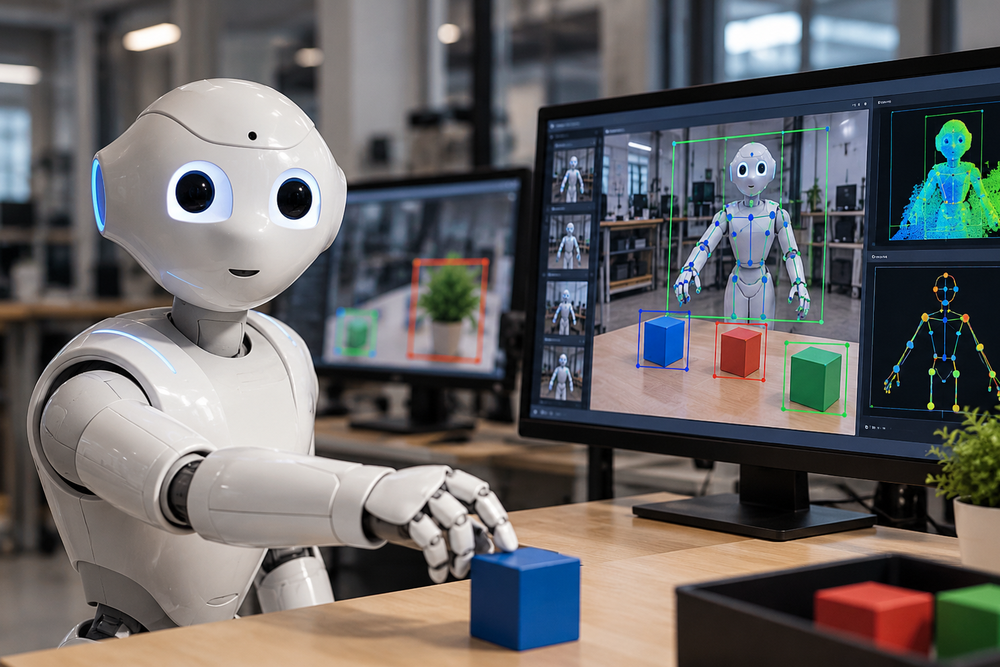
Egocentric Data Collection for Embodied AI
Egocentric Data Collection captures a task from the first-person perspective of the person or agent performing it. Instead of showing only what an object looks like, egocentric footage can show how people reach for objects, use tools, complete multi-step activities and react to the environment around them.
This data can be valuable for embodied AI, vision-language-action research, wearable systems, human-robot interaction and robotic task learning. A project may capture assembly activities, household actions, warehouse workflows, equipment use, object handling or other scenario-driven tasks. The collection specification can define the camera viewpoint, environment, action sequence, object set, metadata and required variation.
After collection, the same data can be enriched with temporal labels, hand-object interactions, object states, actions, keypoints and task steps. Combining collection and annotation under one workflow can reduce hand-offs and make the resulting training data more consistent.
Learn More →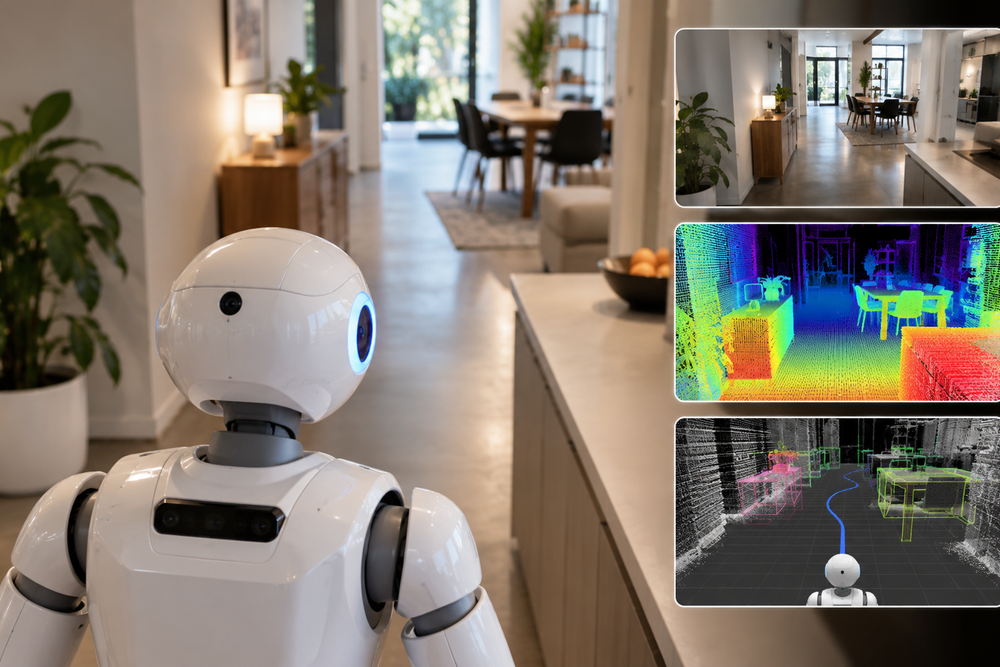
LiDAR and 3D Point Cloud Annotation
Robots and autonomous machines often need depth and spatial awareness in addition to camera-based perception. Learning Spiral AI supports LiDAR Annotation and 3D Point Cloud Annotation for applications where distance, geometry, orientation and three-dimensional relationships matter.
Point cloud projects may involve 3D cuboids, semantic point labeling, object classification or project-specific spatial annotations. These datasets can support robotics, autonomous mobility, industrial environments, mapping and other spatial AI applications. When camera and 3D data are available together, annotation specifications can be designed so that classes and object identities remain consistent across modalities.
Complex 3D data requires careful handling of sparse points, partially visible objects and difficult boundaries. A clear taxonomy, calibrated annotation team and quality review process are therefore essential to reliable output.
Learn More →
Video Annotation, Tracking and Activity Understanding
Robots operate through sequences of events, not isolated images. Video Annotation helps models learn movement, object persistence, actions and interactions over time. We can support frame-level labels, object tracking, temporal events, activity classification and project-specific action annotation.
For a warehouse robot, this might include tracking people, packages and equipment across frames. For an embodied AI system, it may involve identifying when a task begins and ends, which object is manipulated, what action occurs and how the state of the scene changes. For human-robot collaboration, pose or gesture annotation can help models recognise movement and interaction patterns.
Temporal consistency is especially important in video projects. Our workflow can include rules for occlusion, re-entry, identity persistence and edge cases so the model receives coherent labels across a sequence.
Learn More →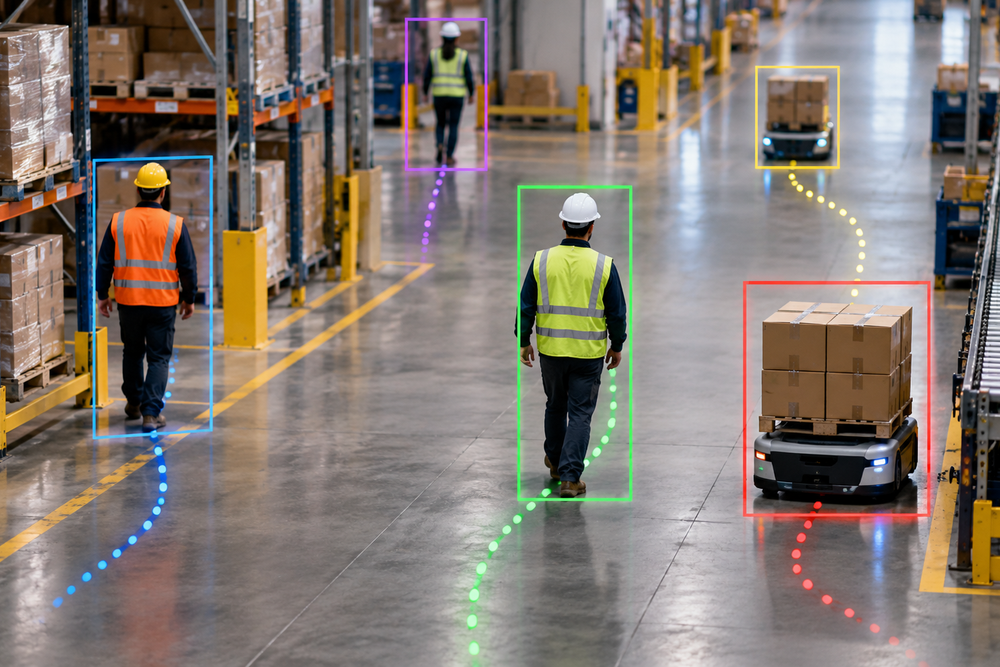
Human in the Loop (HITL) for Complex Physical Data
Physical environments are full of ambiguity. Objects may be hidden, reflective, partially visible or visually similar. Lighting and camera angles change. Actions overlap. Sensor data may contain noise. These conditions make Human in the Loop (HITL) workflows valuable for data creation and model improvement.
Learning Spiral AI can combine model-assisted pre-labeling with trained human review, correction and escalation. Low-confidence or difficult examples can be routed to reviewers, while feedback from client teams or model performance can be incorporated into later batches. This helps turn annotation into an iterative AI Training Data Services workflow rather than a one-time labeling exercise.
Human review also helps maintain consistency when a taxonomy contains subtle distinctions that automated tools cannot reliably resolve.
Learn More →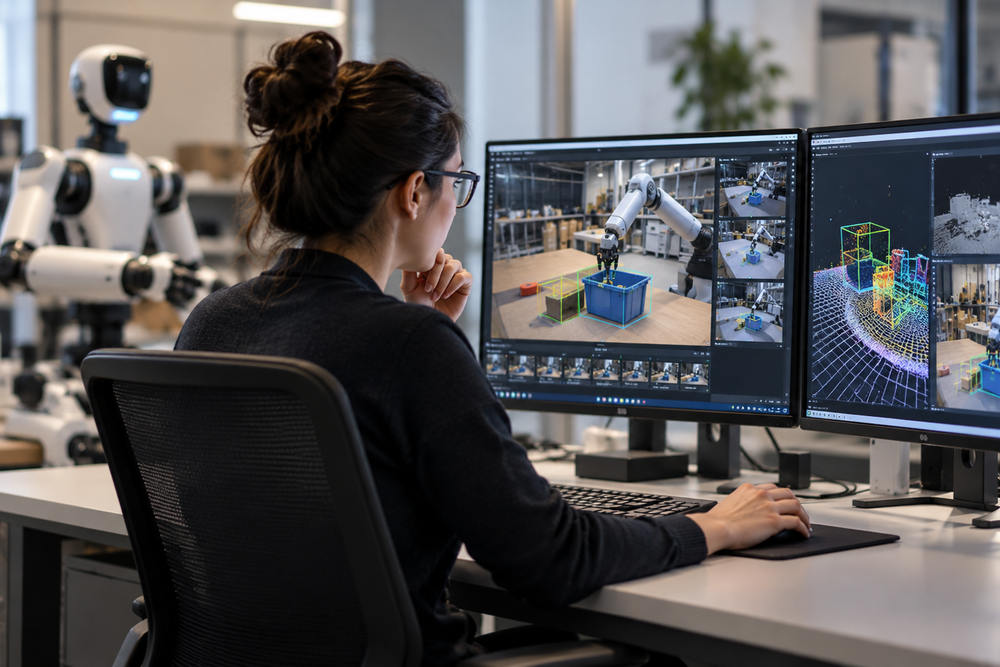
Applications Across Physical AI and Robotics
Our data workflows can support a broad range of robotics and Physical AI applications. In warehouses and logistics, datasets may focus on package detection, rack and shelf understanding, picking, movement and navigation. In manufacturing, training data may support component recognition, visual inspection, assembly workflows and robotic workcells. In agriculture, annotation can cover crops, weeds, fruit, equipment and field environments for smart farming and agricultural robotics.
Other applications can include waste sorting, construction and infrastructure robotics, retail automation, assistive systems, smart mobility and research prototypes. The annotation method should always be selected according to what the model must learn, rather than using the same technique for every problem.
A Structured Workflow from Pilot to Scale
Every Physical AI or robotics project should begin with clear scoping. We first understand the model objective, data modality, annotation taxonomy, output format and acceptance criteria. From there, project-specific annotation guidelines are prepared with examples for both normal cases and edge cases.
A pilot batch is used to validate interpretation before production scale-up. Annotators and reviewers are then calibrated against approved examples. During production, data is processed in controlled batches with quality checks for missing labels, incorrect classes, geometry issues and inconsistency. Client or model feedback can be incorporated into guideline revisions so later batches improve over time.
This staged approach is suitable for both early research Annotation Projects and ongoing Data Annotation Projects that require repeatable delivery.
Why Learning Spiral AI
Learning Spiral AI brings together Physical AI Data Collection, Image Annotation, Video Annotation, LiDAR Annotation, 3D Point Cloud Annotation, Egocentric Data Collection and Human in the Loop workflows under one managed service model. For organisations evaluating a Data Annotation Company or Data Labeling Company, this multimodal capability can simplify vendor management and improve continuity across the data pipeline.
We focus on creating usable training data around the model requirement. That means aligning taxonomies, annotation instructions and quality processes with the intended AI application instead of treating every dataset as a generic labeling task.
Contact Us →
Frequently Asked Questions
What types of data can Learning Spiral AI process for robotics?
We can support project-specific image, video, egocentric, LiDAR and 3D point cloud datasets, with annotation approaches selected according to the model objective.
Can you support both pilot and production-scale projects?
Yes. A pilot-first workflow is recommended to validate guidelines and quality expectations before scaling the annotation operation.
What is the role of HITL in robotics data?
Human in the Loop review helps resolve ambiguous objects, actions, boundaries and edge cases that automated systems may label inconsistently.
Do you collect data as well as annotate it?
Yes, Data Collection and annotation can be combined where the project requires custom image, video, audio or egocentric datasets